
Bett Brasil Sets Attendance Record and Solidifies Its Leading Role in the Education Sector
)
The 31st edition of Bett Brasil reaffirmed the event’s leading role in the educational ecosystem by bringing together more than 65,000 participants from May 5 to 8 at Expo Center Norte in São Paulo.
With a 40% increase in attendance compared to the previous year, the event featured more than 375 exhibiting brands, 450 speakers, 13 concurrent sessions, and a program dedicated to discussions on innovation, technology, artificial intelligence, and human development in education.
Throughout the week, educators, public and private administrators, experts, businesses, and public policymakers gathered to discuss possible paths toward a more humane, innovative education system that is attuned to contemporary challenges.
“What we saw at this year’s event was education in motion—one that doesn’t deny the challenges but also doesn’t shy away from forging concrete paths forward. Bett Brasil is a meeting place for thinkers, doers, and change-makers. Furthermore, the record attendance and the connections made underscore the event’s relevance to the entire education sector,” says Bett Brasil Director Claudia Valério.
The event’s opening panel brought together leaders to discuss how to effectively combine individual and collective intelligence with new technologies to transform the present and future of education. Participants in the ceremony included the director of Bett Brasil, Claudia Valério; Juliana Velho, chief of staff at the São Paulo State Department of Education; Ana Úngari Dal Fabbro, general coordinator of Technology and Innovation in Basic Education at the Ministry of Education (MEC); Priscila Cruz, executive president of Todos Pela Educação; Professor Débora Garofalo, an international authority on education; and Marlene Schneider, president of SIEEESP.
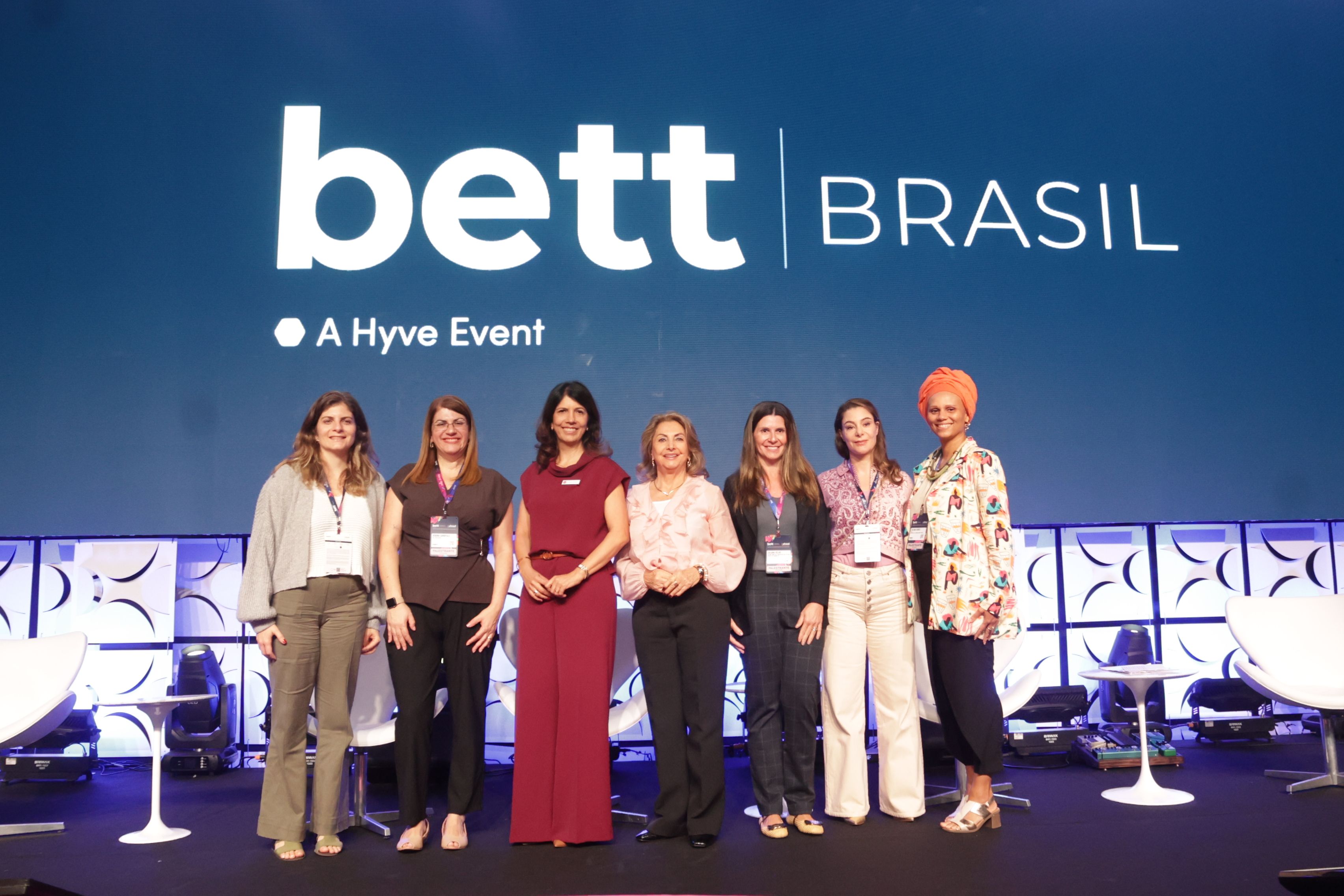
The opening panel brought together female educational leaders. Photo: Bett Brasil.
Diverse programming
Bett Brasil’s content program was spread across 13 auditoriums and concurrent thematic forums: the Basic Education Congress, the Administrators’ Forum, the Ahead CIEE Forum—Higher Education, the AI in Education Summit, the Startups Arena, the Public Education Auditorium, Tech User Labs, and the workshop rooms.
In all, more than 450 speakers participated in the program, bringing together leading figures in education, researchers, public officials, and experts in technology and human development. Among those present were psychologist and writer Rossandro Klinjey; Alexandre Sayad,director of ZeitGeist and a UNESCO consultant ; Silvio Meira, chief scientist at TDS.company; Viviane Mosé, director of Usina Pensamento; and historian Leandro Karnal.

Viviane Mosé spoke about emotional health during a panel discussion at Bett Brasil. Photo: Bett Brasil.
Also on the panel of speakers were Francisco Tupy, who holds a Ph.D. from the University of São Paulo; Lucia Dellagnelo, deputy director for Education and Skills at the OECD; Sandro Bonás, CEO of Conexia; Rodrigo Dib, superintendent of CIEE; Telma Pantano, educational psychologist at the Institute of Psychiatry at FMUSP’s Hospital das Clínicas; and Vanessa Cavalieri, presiding judge of the Rio de Janeiro Court for Children and Youth.
Adriana Martinelli, content director at Bett Brasil, explains that the program for this edition was designed to prompt practical reflection on the role of multiple intelligences in the contemporary educational environment.
“The central theme—‘Individual, Collective, and Artificial Intelligences: All Within Us, Right Now!’—was an invitation for educators, administrators, and organizations to discuss how different human and technological capabilities can work together in an integrated way in the day-to-day life of schools and educational systems. Our goal was to bring together discussions related to innovation, human sensitivity, and the concrete transformation of education,” he notes.
AI in Education Summit
Artificial intelligence took center stage at the 31st edition of Bett Brasil. For the first time, the event hostedthe “AI in Education Summit” on May 5 and 6 at Expo Center Norte, bringing together experts, educators, and leaders to discuss practical applications and the impact of this technology on the future of education.
Co-curated by Bett Brasil and Conexia Educação’s educational AI platform,AI4School, the Summit featured discussions focused on the educational landscape, covering everything from practical classroom applications to ethical issues and the limits of automation in the learning process.
The program featured speakers such asGuilherme Cintra, Director of Innovation at the Lemann Foundation;Américo N. Amorim, from NY University/Escribo Educação do Seu Jeito; Gi Santos, educational consultant for innovation at the Creative Schools Institute; Mariana Ochs, education coordinator at the Palavra Aberta Institute; Paulo Silveira, co-founder of Alura; Alessandra Borelli, an attorney specializing in digital law, data protection, and artificial intelligence; Rodrigo Nejm, a specialist in digital education at the Alana Institute; and Isabel Amigo, Innovation Management Manager at Ceibal in Uruguay.
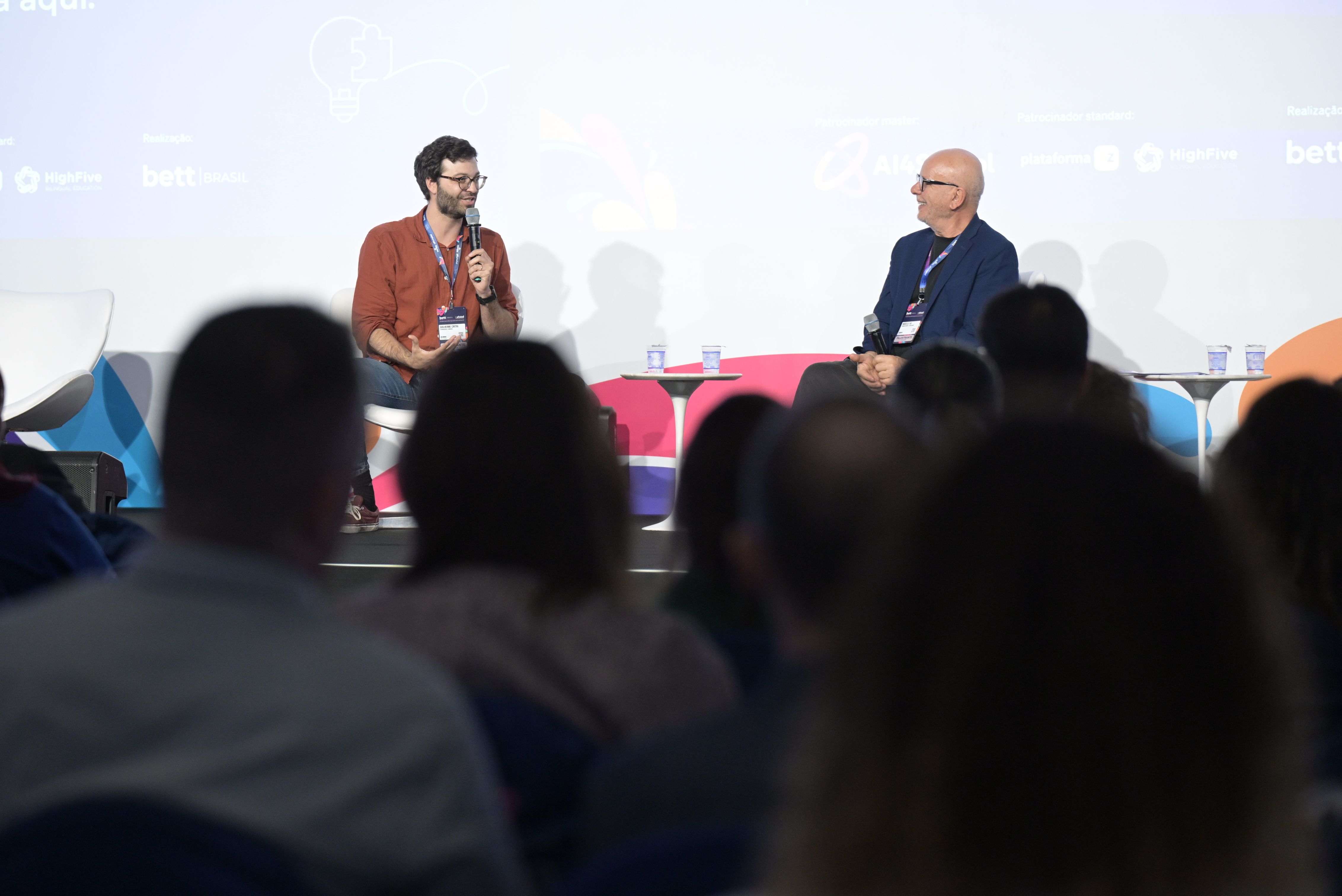
The impact of artificial intelligence on the education sector was the focus of the AI Summit. Photo: Bett Brasil.
By placing AI at the center of the agenda, the Summit’s goal was precisely to broaden the discussion on the direct impact of technology on education, without losing sight of the human dimension of learning.
For Sandro Bonás, CEO of Conexia Educação, the Summit’s main distinguishing feature was that it made schools and educators the central figures in this conversation. “We’ve seen this topic come up at many technology and business conferences, but not at education events. Over these two days, we discussed the dilemmas, safeguards, and risks, but also how we can change students’ lives through such revolutionary technology,” he said.
CIEE Ahead Forum – Higher Education
At a time when higher education is under pressure to respond to changes in the labor market, technology, and new social demands, Bett Brasil has opened the floor to an increasingly urgent debate: How can we prepare institutions, faculty, and students for a constantly changing future?
It was against this backdrop that the CIEE Ahead Forum – Higher Education took place during the event’s 31st edition, bringing together academic leaders, experts, and representatives from companies and civil society organizations for a program dedicated to the challenges and future of higher and vocational education in Brazil.
Held for the first time in partnership with the Center for Business-School Integration (CIEE), the Forum is a strategic initiative by Bett Brasil that brings together two worlds that are now inextricably linked: education and employability.
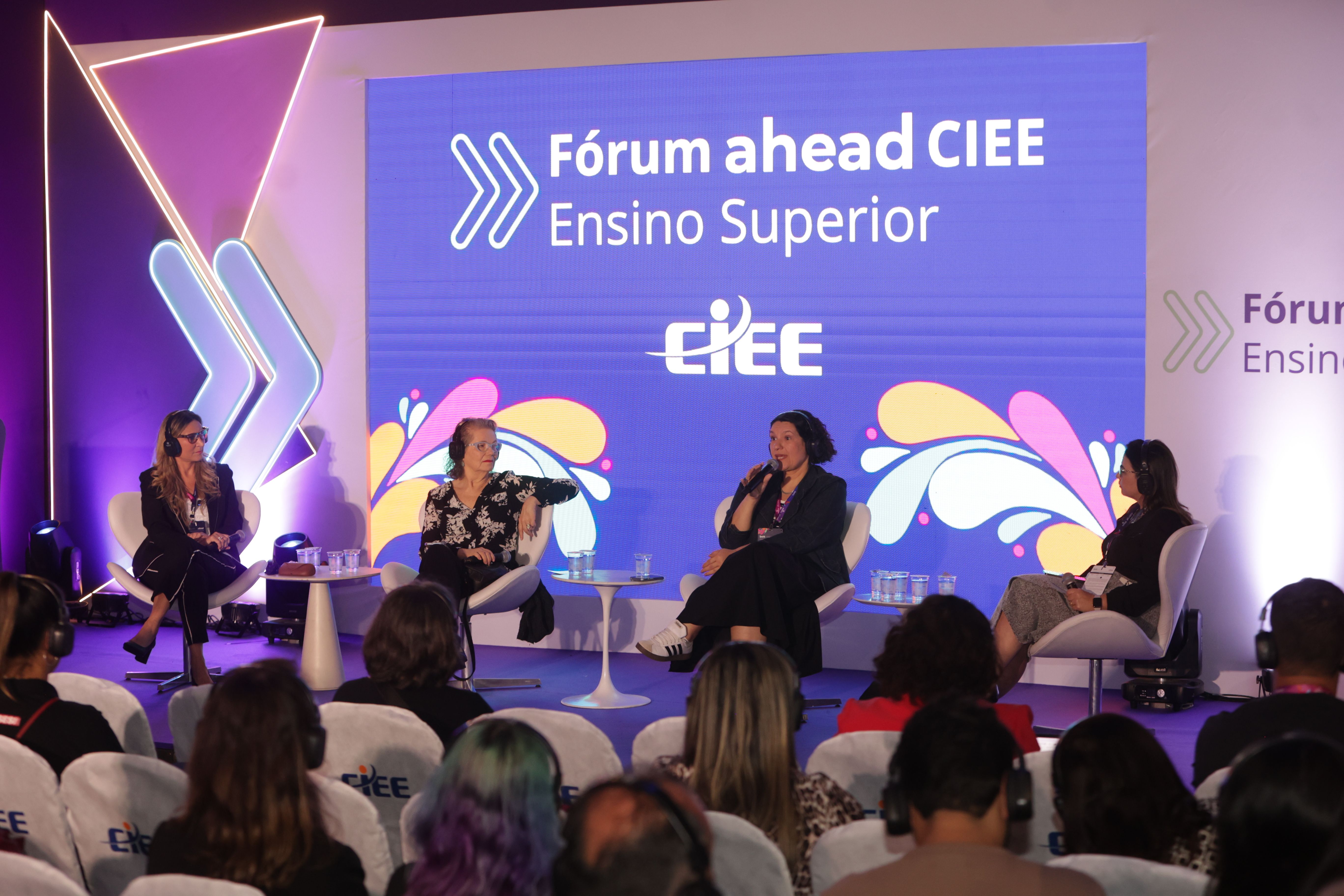
The CIEE Ahead Forum brought together various experts to discuss the challenges and future of higher education. Photo: Bett Brasil.
For Rodrigo Dib, CIEE’s Superintendent of Institutional Affairs and Innovation, the relevance of the debate is directly linked to the current situation the country is facing.
“Bett Brasil has never been more necessary. I think that for our country, at a time when we’re seeing this debate between education and the new world of work, it has never been more necessary to discuss innovation in education. And more than that, on this Forum stage, to bring this connection—between education and the job market—into the discussion. If we want to prepare young people so they can lead productive lives, we need to talk about work,” he said.
With more than 30 speakers and an exhibition area dedicated to solution providers for the sector, the Ahead CIEE Forum—Higher Education has become a space for the practical exchange of experiences, trends, and models that are already beginning to impact universities and educational institutions throughout Brazil. Check out how it went here.
Managers' Forum
In an educational landscape marked by rapid change, new technologies, and increasingly complex social challenges, the role of school leadership has taken on even greater significance at Bett Brasil. In this context, theAdministrators’ Forumhas become a space dedicated to strategic reflection and the exchange of experiences regarding educational management.
One of the panel discussions focused on the so-called“mix of intelligences”needed to transform schools in a context increasingly shaped by artificial intelligence. The panel featured brothersLuciano Meira, a professor at Proz Educação, andSilvio Meira, chief scientist at TDS.company, who challenged the audience by arguing that technological innovation alone is not enough to bring about real change in education.
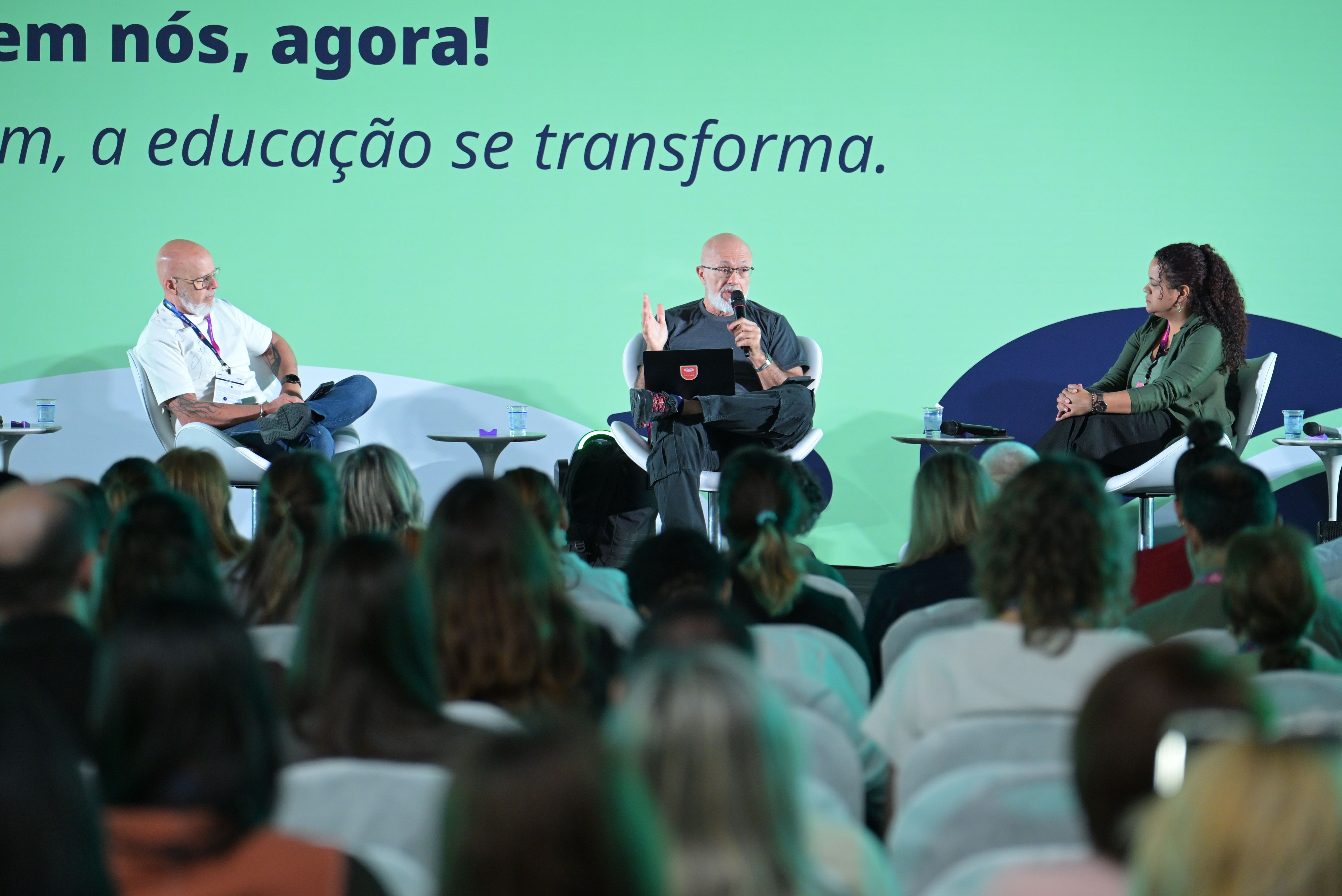
The forum brought together leaders to discuss the main challenges in educational management. Photo: Bett Brasil.
For Luciano Meira, digital transformation in schools is directly linked to the discussion of equity. “There’s no point in advancing artificial intelligence if we don’t create the conditions for everyone to have access to the same opportunities to develop skills and abilities. Technology can reduce costs, but without equity, it can also widen inequalities,” he said.
The discussion also addressed the gap betweensociety’s hyperconnected reality and the models that still prevail in schools. In introducing the concept of the “phigital” world—which integrates the physical, digital, and social realms—Silvio Meira argued that education needs to reinterpret its pedagogical practices.
“Today, we have completely integrated experiences, but schools have not yet been able to interpret this within their own framework. The challenge is to redesign teaching practices so that technology makes sense within the learning process,” he emphasized.
Another key focus of the Managers’ Forum wasinclusion. At a time when neurodiversity is gaining increasing prominence in the educational debate, experts argued that institutions should move beyond mere rhetoric and promote effective changes in their culture and pedagogical structure.
The panel featuredKadu Lins, CEO of the Autism Institute and the University of Inclusion, andTelma Pantano, a speech-language pathologist and educational psychologist at the Institute of Psychiatry at FMUSP’s Hospital das Clínicas.
During the debate, the experts emphasized that inclusion cannot be understood merely as a one-off adjustment, but rather as a profound overhaul of relationships, curricula, and school practices. For Kadu Lins, the challenge lies in ensuring that each student is understood in their individuality. Read more here.
Public Education and the Startup Scene
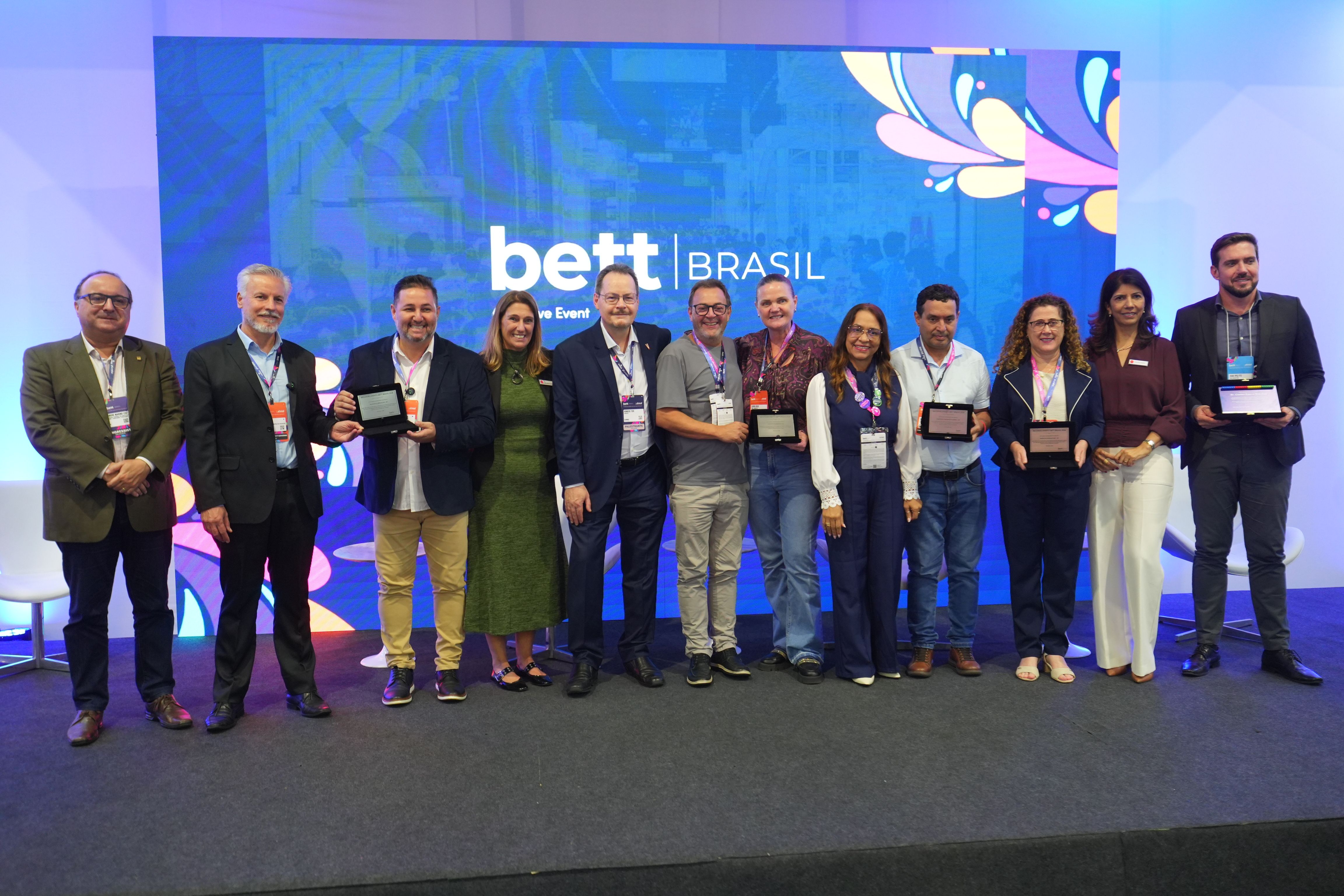
Among the highlights of the Public Education Auditorium, the panel discussion on the new National Education Plan (PNE 2024–2034) offered a pragmatic perspective on the challenges and opportunities of the coming decade. Other topics also took center stage in the discussions, such as inclusive education in practice, early childhood education in preparation for literacy, and teacher training.
The venue also hosted the “Municipal Recognition”, a new award that highlighted how partnerships between municipal networks and companies in the sector have driven concrete and scalable solutions for public education in different regions of the country.
For its part, Arena Startups reinforced its role as a showcase for transformative solutions in education. With more than 20 exhibiting startups, 35 speakers, and 18 content sessions, the event featured discussions on the impact of new technologies on the behavior of students and professionals, the use of artificial intelligence to combat misinformation, and practical applications of innovation in the training of teachers and students.
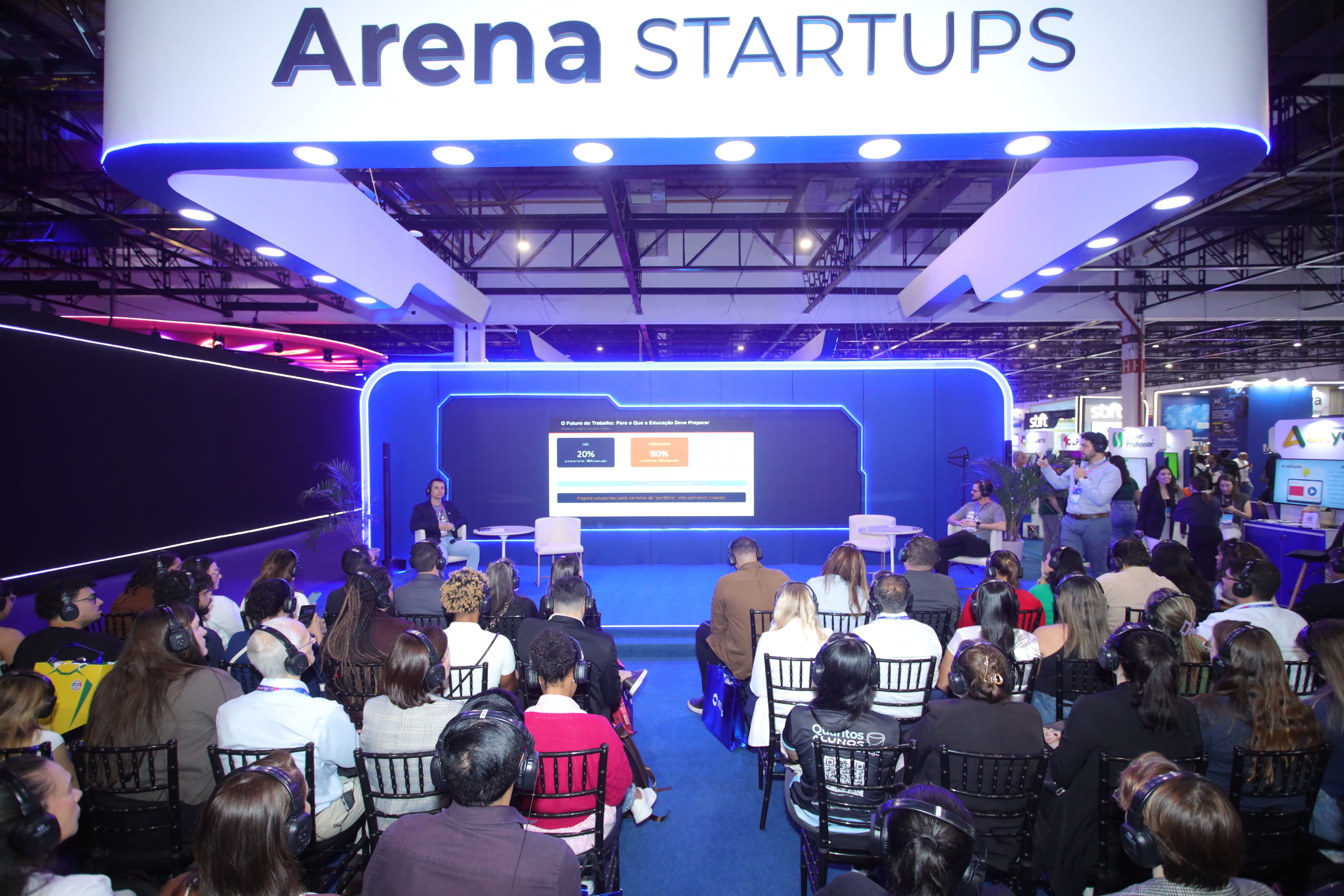
The auditorium showcased trends and innovations from the educational startup ecosystem. Photo: Bett Brasil.
The Arena also hosted the awards ceremony for the Bett Brasil Edtech Awards, which recognized startups with technological solutions addressing the key challenges in education. The startups “Muda” and “Prol Educa” were honored in the Product Solution Fit and Product Market Fit categories, respectively.
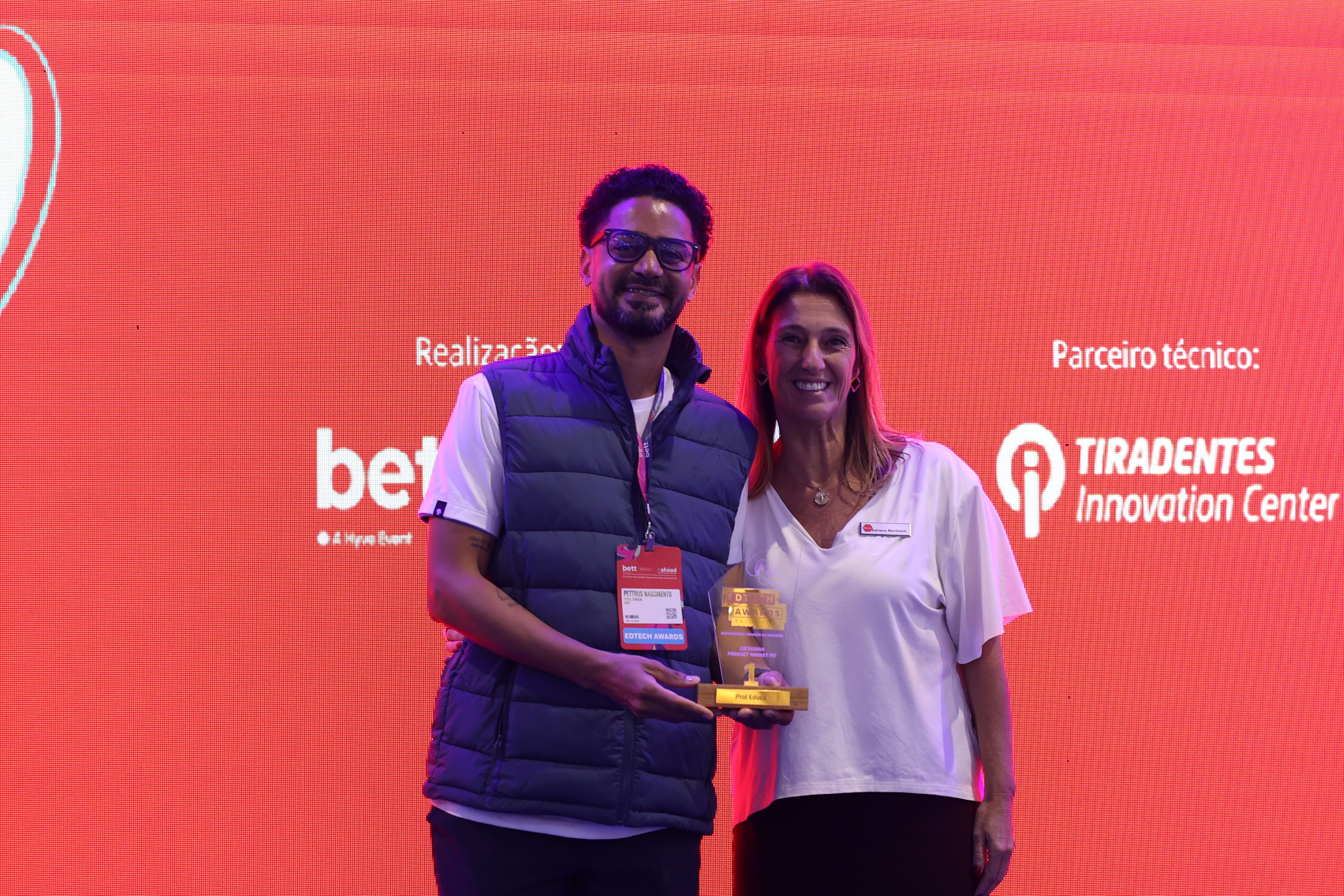
Prol Educa, represented by Pettrus Lins, was the winner in the Market Fit category. Photo: Bett Brasil.
Transformative Educator Award
The Transformative Educator Award announced the winners of the national round during Bett Brasil 2026. The initiative, organized by Bett Brasil, Sebrae, and Instituto Significare, recognized innovative educational practices across the country. In this third edition, the award saw record-breaking participation, with 5,560 entries from participants in 27 states.
“If we want to bring about real, consistent innovation, we also need to show educators new possibilities, new paths. With this award, we’re opening up a kind of gateway so they can understand that innovation in education can go beyond the walls of schools and classrooms. It’s not just about what you’ve done, but what you’re doing and will continue to do for education,” saysWellington Cruz, president of the Significare Institute.
The awards program received submissions of educational projects aligned with three main categories based on Design Thinking: Pedagogical Innovation and Active Methodologies, a category exclusively for teachers; Transformative Educational Management, aimed at educational administrators; and Inclusion and Sustainability in Education, which encompasses both teachers and administrators.
“More than just recognizing best practices, the Transformative Educator Award values the ideas and perspectives of those who face the challenges of education on a daily basis. Our goal is to drive concrete change and inspire teachers and administrators to build a more innovative and inclusive future,” saysAdriana Martinelli, director of content at Bett Brasil.
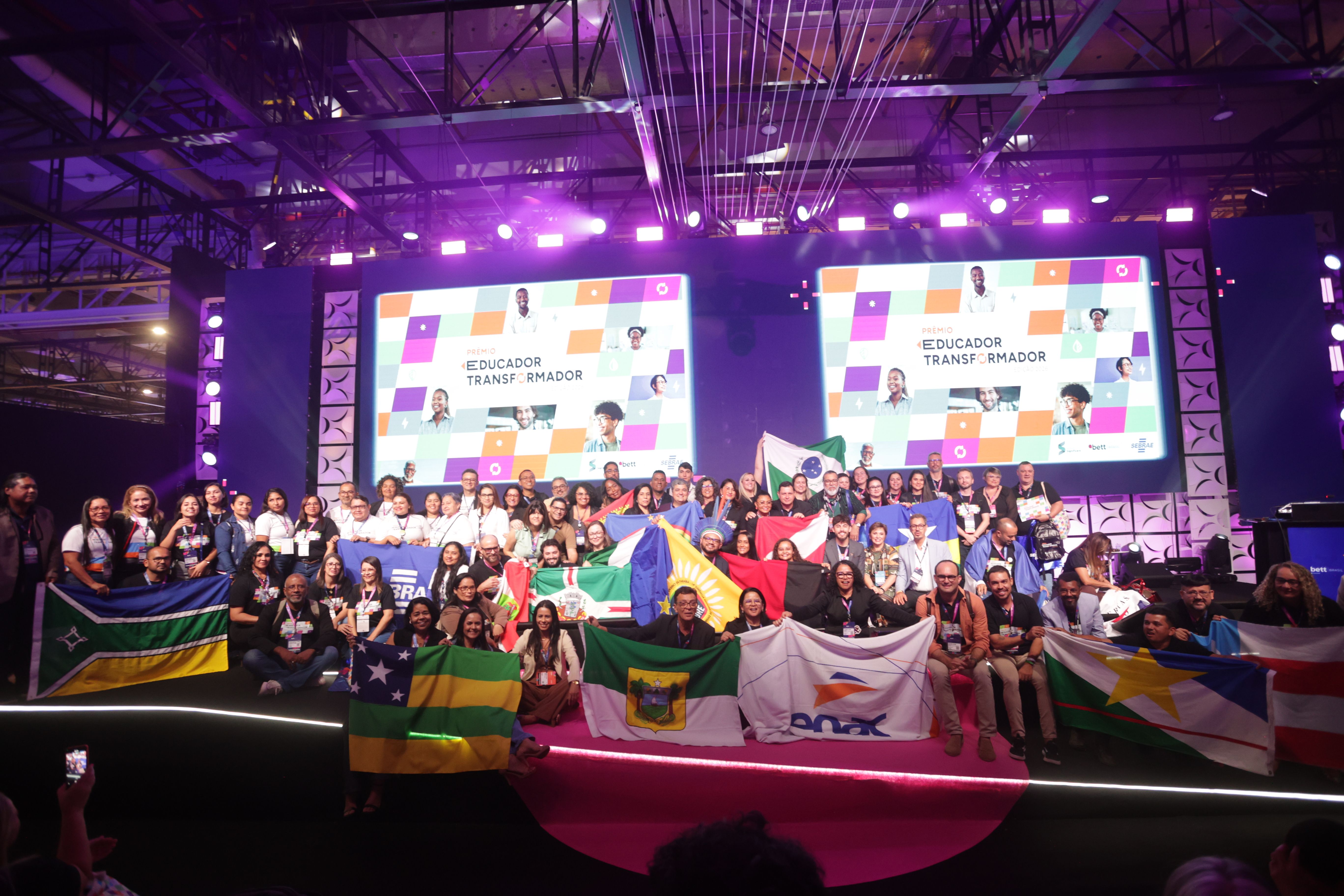
The initiative recognized innovative projects developed by teachers and educational administrators. Photo: Bett Brasil.
Daniel Munduruku, author and speaker, was also present at the ceremony, sharing a bit about his journey and reflecting on the importance of school in his life. “It is a joy and a pleasure to participate in this edition of Bett Brasil, offering words of encouragement and inspiration to the educators who work so hard to transform our country. Teachers need to see themselves as flowing rivers—water that is fluid and renews itself,” the author emphasizes.
All candidates who placed 1st, 2nd, and 3rd in the National Round received a certificate of participation, a digital badge, a trophy, as well as a laptop and a backpack. Participants who placed 2nd won a package to participate in a national mission for an entrepreneurship education event to be determined.
The winners of the National Round in each category received a complete package to attend Bett UK 2027 in London, as well as an online MBA in Entrepreneurial Education.
The winning projects were: “Educational AI Lab + Avança Belo Monte Program,” by Professor Maxwell Melo da Silva (AL); “Between the Dunes and the Sea: Planning and Implementing Tourist Itineraries Using Google Earth,” by Professor Elisângela Bezerra das Neves Holanda (RN); and “Implementation of a Climate and Environmental Monitoring Station,” by Professor Felipe Salvador Weissheimer (SC).
Also recognized were the projects “Drought Observatory,” by teacher Thaini Maiara Pereira Alves (AM); “Solidarity Wholesale Market,” by educator Laila Larissa Teles Sousa Alves (PE); “SIRE – School Reuse System,” by educator Daniele Andressa Bassanesi (MS); as well as the “Structured Decision-Making Method” by João Carlos Carneiro (SP); “My Day as a Manager” by educational administrator Gemerson Farias Roque da Costa (PB); and “Integrated School Experience Center (CEEI)” by Rosinalva Neres Rocha (MG).
Bett Conecta
Bett Brasil turned meetings into concrete opportunities for the future of education. During the four days of the event’s 31st edition,Bett Conecta facilitated more than 1,000 strategic meetings between education administrators and providers of educational solutions, establishing itself as one of the leading platforms for high-quality networking and business development in the sector in Brazil.
The initiative brought together more than 210 education administrators and 80 providers of customized solutions with the goal of forging partnerships capable of accelerating innovation, inclusion, and transformation in Brazilian educational institutions.
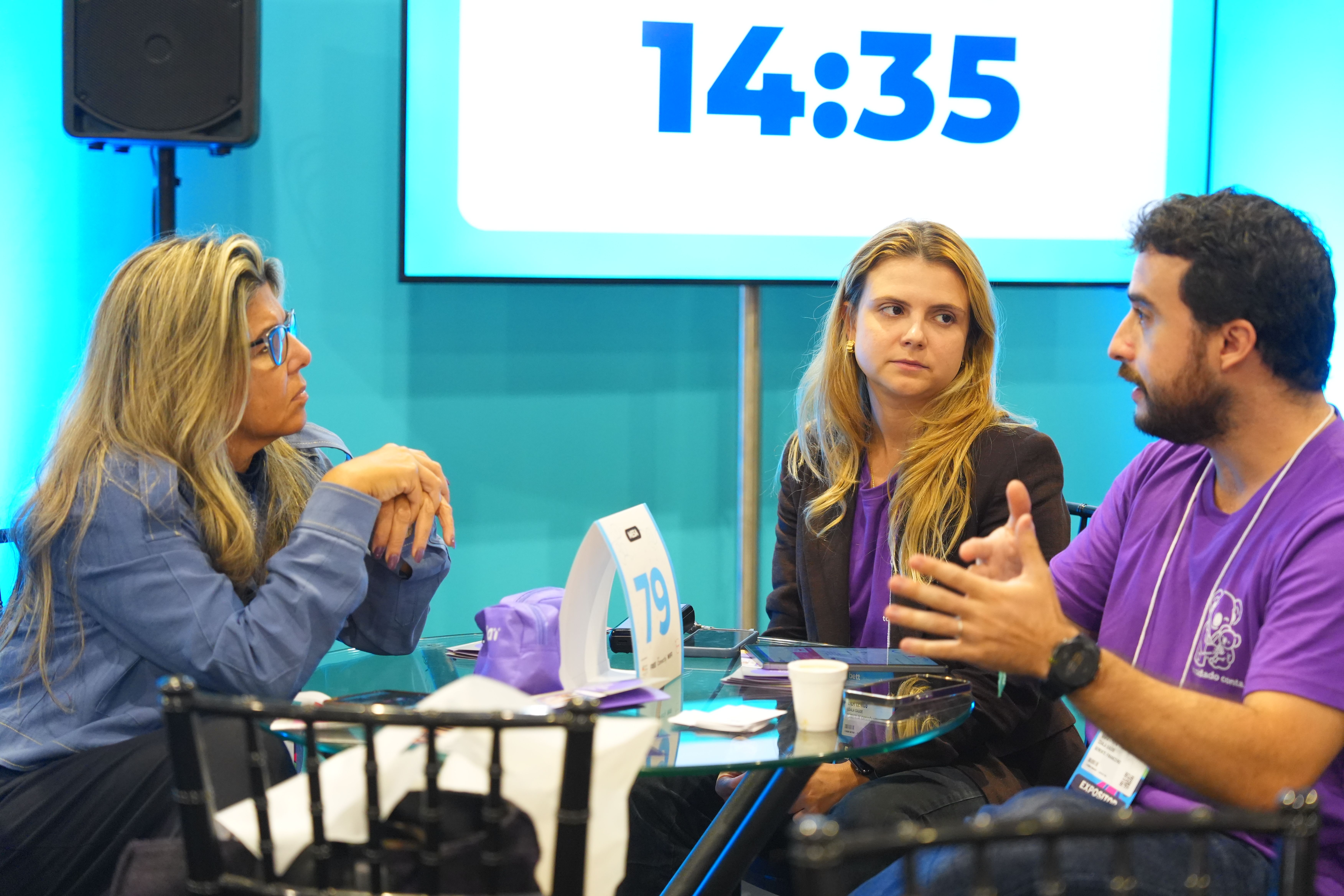
Bett Conecta fostered partnerships and new business opportunities in the education sector. Photo: Bett Brasil.
More than just bringing businesses and schools together, Bett Conecta has become a forum for decision-making, sharing experiences, and charting a course to address today’s educational challenges. In one-on-one meetings, administrators had direct access to solutions focused on learning, technology, accessibility, professional development, and educational management.
Exhibition Area
The bustling hallways, meetings at the booths, immersive experiences, and discussions about the future of contemporary education set the tone for the Bett Brasil exhibition area.
More than just a business venue, the trade show once again served as a snapshot of the current state of the education sector: an ecosystem that seeks to balance technological innovation, human development, management efficiency, and new learning experiences.
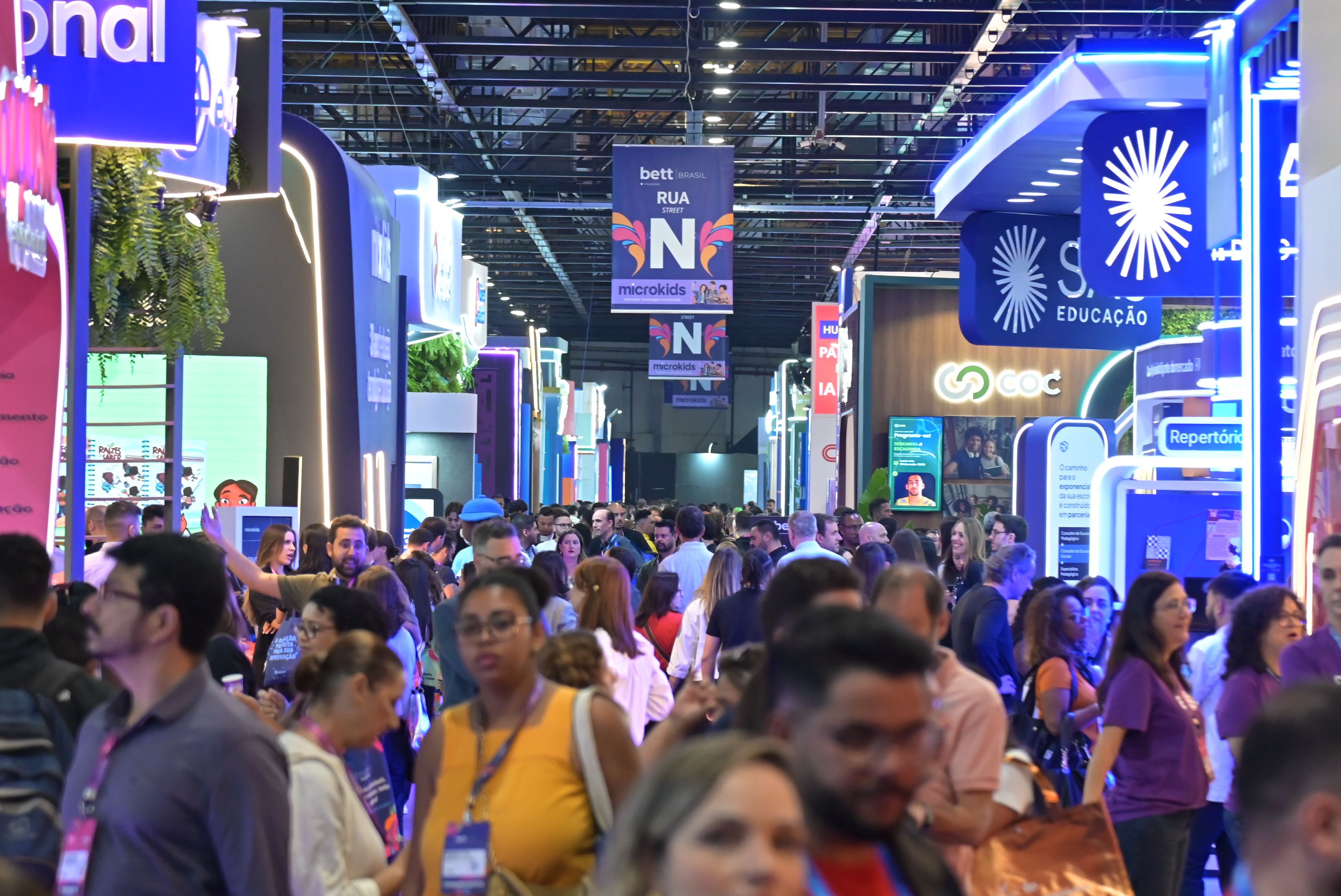
Hundreds of brands showcased their new products and innovations for the education sector. Photo: Bett Brasil.
With more than 375 exhibiting brands, the 31st edition of Bett Brasil brought together companies, institutions, startups, and educational systems focused on the public and private educational ecosystem during the four-day event.
See also:
- Bett Brasil 2026 transforms the exhibition area into a showcase for trends, business, and experiences in the education sector
- Artificial Intelligence Redefines Educational Solutions at Bett Brasil 2026
- Inclusive education takes center stage at Bett Brasil with solutions based on AI, accessibility, and personalized learning
As its 31st edition came to a close, Bett Brasil reaffirmed its role as a leader in educational dialogue and innovation in Latin America, emphasizing that the future of education depends on the integration of technology, people, and ideas to promote a more human, inclusive, and meaningful learning experience.
Share on social media:
Categories
- The Future of Education
- Innovation